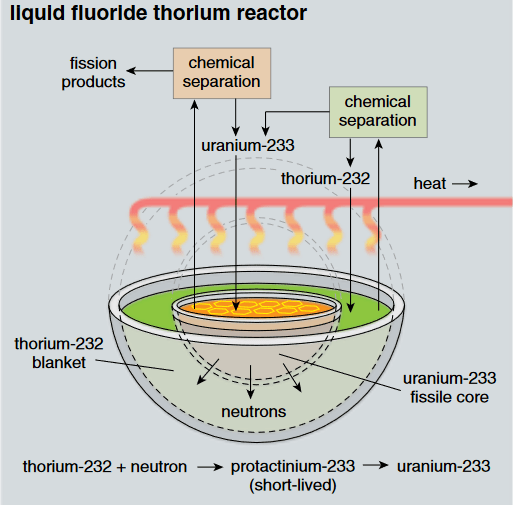
LFTRs are a type of 4th generation nuclear reactor design that using a liquid fluoride salt as the coolant and neutron absorbent. The advantages of using these fluoride salts include our vast existing knowledge of the material as they are commonly used in industrial processes such as aluminum processing and their thermal properties make them quite safe for use in a reactor. The fluoride salts that have been proposed for use in LFTRs have a boiling point of around 1400 degrees Celsius, to put that in perspective most magma has a temperature of between 700 and 1300 degrees Celsius so not even exposure to magma would cause a pressure explosion like Chernobyl. Additionally the reactors have a negative temperature coefficient of reactivity. If the temperature in the reactor rises beyond the intended range, the fuel itself responds with thermal expansion, reducing the effective are of neutron absorption, thus suppressing the rate of fission and causing the temperature to fall back into acceptable ranges. Because of this, with the appropriate formulations and configurations of nuclear fuel, runaway reactions become implausible.
Enhanced Safety in Liquid Fluoride Thorium Reactors (LFTRs)
 Matt's Blog